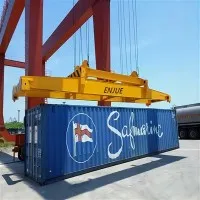
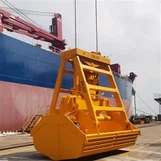
Shanghai ENJUE Machinery Equipment Co., Ltd is one of the most experienced manufacturers and suppliers of electric rotating crane hook in China. If you're going to buy custom electric rotating crane hook made in China, welcome to get more information from our factory. For price consultation, contact us.
The Electric Rotating Crane Hook must be strong enough to withstand the maximum loads involved in the lifting operation, taking into account a certain safety factor to avoid failure due to overloading. The construction of the hook is also crucial. To facilitate loading and unloading of goods, hooks generally have openings, but in some special cases, a closed structure is more effective in preventing objects from slipping during lifting. In addition, anti-slip measures are an important part of the design, and many hooks are fitted with latches or other safety devices to prevent the load from being accidentally dislodged. Finally, as hooks are often repeatedly subjected to heavy loads, fatigue strength is also an important consideration in the design, and the design needs to ensure that the hook is able to withstand the fatigue stresses of the material without cracking or fracturing during its service life. There are also many types and names for hooks, such as crane hook, crane hook safety latch, hook crane, crane hook latch, engine hoist chain and hook, lifting hooks for cranes, crane, swivel hook, automatic crane hook, crane lifting hook, truss lifting hook, heavy duty crane hook.
The manufacturing process for Electric Rotating Crane Hook consists of three important steps: forging, heat treatment and surface treatment. The forging process heats the metal and applies pressure to form it into the final shape of the hook. The forged metal has a high degree of densification and strength, which is critical to the hook's load-carrying capacity. This is followed by heat treatment, commonly quenching and tempering, a process that increases the hardness of the hook while maintaining a level of toughness that ensures the hook is less likely to break or deform under high intensity loads. Finally, there is surface treatment, which usually includes sandblasting, polishing and anti-corrosion treatment such as galvanising or painting. These processes not only improve the appearance of the hook, but also enhance its corrosion resistance and durability, especially when used outdoors or in wet environments, where surface treatment is critical.

Hooks are used in a wide range of industries and environments, each designed to suit different operational requirements. In harbours and ship-handling operations, swivel hooks are very common, as they offer flexible 360-degree rotation and are suitable for quickly adjusting the angle at which goods are lifted. In marine engineering, hooks made of stainless steel are suitable for oil platforms, offshore wind power and other fields due to their superior corrosion resistance and ability to withstand harsh marine environments for long periods of time.


In order to ensure the long-term safety of the hook, regular maintenance and repair is essential. First of all, the hook should be fully inspected before and after use to observe whether there are cracks, deformation or obvious wear and tear, and if serious wear and tear or damage is found, the hook should be stopped immediately and replaced. For rotary hooks, regular lubrication of their rotating shafts is key to maintaining their flexibility, which effectively reduces friction and wear. For hooks used in wet or corrosive environments, rust and corrosion protection is also particularly important, and regular application of a rust inhibitor or surface treatment can extend their service life. Finally, regular load tests are necessary to confirm the hook's load capacity and ensure its safety in daily operation.
In order to ensure the quality and safety of hooks, hooks manufactured and used worldwide must comply with relevant international standards and certifications. These standards include the European EN 1677 standard, which focuses on the strength and safety requirements for hooks and other lifting accessories; the US ASME B30.10 standard, which specifies technical requirements for the design, manufacture and use of hooks; and the International Organisation for Standardisation's (ISO) ISO 7597 standard, which provides specifications for the manufacture of hooks, test methods and guidelines for their use. These standards ensure that hooks operate with the highest level of safety and reliability in all working environments and prevent accidents.


Hot Tags: electric rotating crane hook, China electric rotating crane hook manufacturers, suppliers, factory, container tandem spreader, container spreader for reach stacker lifted containers, container spreader for hazardous cargo, crane container spreader, container spreader for equipment cargo handled containers, container spreader for ceramic cargo