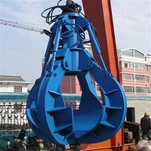
In high-intensity container handling operations at ports, yards, and other locations, mobile over-height container spreaders serve as auxiliary lifting devices and are widely used for lifting oversized cargo, open-top containers, and flat racks. The connection method between them and the main lifting device is directly related to the safety and efficiency of the operation.
A dual safety mechanism of 'pin connection and hook connection' is used between the mobile over-height container spreader and the
container lifting frame.
This article will provide a detailed analysis of it.
1. Overview of the Connection Mechanism
The connection between the over-height container spreader and the main lifting device is divided into two levels:
Main Connection: Pin and Pin Sleeve Fit
The lifting device is inserted into the pin sleeves of the four corner boxes of the over-height container spreader through four pins, forming the basic connection.
This structure bears the main vertical load and ensures that the relative position between the lifting device and the over-height container spreader is fixed.
Auxiliary Connection: Hook Connection
In addition to the pin connection, the over-height container spreader is also equipped with hooks that correspond to hooks on the lifting device, forming a mechanical anti-detachment device.
This design is mainly used to prevent accidental detachment caused by vibration, eccentric load, or pin wear.
Design Principles and Engineering Considerations
Power-free, Fully Mechanical Structure
The superstructure itself has no hydraulic or electrical power source; its extension, retraction, and locking actions rely entirely on the crane. This design of our over-height container spreader simplifies system complexity and enhances reliability, but also imposes higher requirements on the precision and stability of mechanical connections. The dual-connection mechanism is specifically intended to compensate for the potential shortcomings of the power-free structure in terms of impact resistance and anti-loosening.
Anti-detachment Logic of Hook Connections
In pin connections, if there is a slight gap or impact load between the crane and the superstructure, the pin may gradually slide out of the pin sleeve. The hook functions as an auxiliary restraint, providing the following protections:
Axial Limitation: restricts the axial movement of the pin;
Lateral Misalignment Prevention: prevents relative displacement between the crane and the superstructure.
Redundant Safety: even if the pin fails, the hook can still maintain basic connection.

Dimensional Matching and Standardization Requirements
The document clearly states that "hook dimensions must match those of the crane's hook," which means:
The hook opening width, slot depth, and locking method must be fully compatible with the main crane.
The superstructure should be interchangeable with cranes of different brands.
The design should consider quick assembly/disassembly and error-proofing features to improve on-site operational efficiency.
The over-height container spreader superstructure's dual connection mechanism of 'transfer sales hook' reflects the design concept of 'redundant safety' and 'mechanical reliability' in port machinery design. Under complex conditions of no power, high load, and multi-brand compatibility, this mechanism provides solid assurance for the safe and efficient operation of the superstructure.
In the future, as automated terminals demand higher equipment compatibility and safety, similar dual connection structures are expected to become standard configurations in the industry.