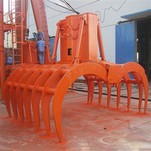
As a core actuating mechanism in bulk material handling, the electric hydraulic grab's safe operation is critical not only to equipment longevity and operational efficiency but also directly to personnel safety and on-site regulatory compliance. Based on internationally recognized operational standards, this guide systematically outlines the complete workflow-from pre-start inspections and in-service controls to emergency response-while integrating key aspects such as hydraulic systems, lifting accessories, and human-machine coordination. It provides actionable, professional guidance for operators, maintenance crews, and site supervisors alike.
1. Pre-Start Preparation and Documentation Management
Role of Operating Instructions: The operating instructions constitute a legally binding technical document required for lawful and safe commissioning. Personnel must read the entire manual thoroughly before the initial start-up and keep it stored in a designated, easily accessible location for future reference during maintenance, training, and troubleshooting.
Personnel Qualification Requirements: Commissioning, servicing, and operation of the electric hydraulic grab shall be performed exclusively by trained and qualified personnel who have received formal instruction on this specific model. Unauthorized or untrained individuals are strictly prohibited from operating the equipment.
2. On-Site Safety Distances and Personnel Control
Restricted Zones: No person shall stand in or under the electric-hydraulic grab, nor within its working radius during operation. Prior to start-up or during any movement, the operator must visually confirm that no personnel remain in the danger zone.
Safety Distances: All on-site personnel must maintain a sufficient and clearly defined safety distance from the electric-hydraulic grab at all times. It is expressly prohibited to move the load over any person.
Communication Assurance: Where direct voice communication between the commissioning supervisor and the crane operator is not available, the operating company shall provide appropriate equipment (e.g., two-way radios) and, in advance, agree upon the work plan and standardized hand/signal commands.
3. Crane Operation and Rigging Discipline
No Riding: It is absolutely forbidden to transport people on the load or on the electric hydraulic grab itself.
Load Capacity Limits: Never exceed the rated lifting capacity of the crane, the motor clamshell grab, or any lifting accessories (including wire ropes, chains, shackles, etc.).
Sling Gear Integrity: Damaged sling gear, or any gear where the identification mark is no longer legible, shall not be used. Chains must not be twisted, knotted, or subjected to side loading.
Visibility and Signal Dependency: The crane operator must maintain visual contact with the load or empty hook run during all crane movements. If this is not possible, operations shall only continue under the direction of a designated signalperson.
Prohibited Maneuvers: It is forbidden to use the electric hydraulic grab to tear off stuck loads, to pull loads transversely, or to move railway wagons or other vehicles. Jerky starting, lifting, stopping, or lowering must be avoided at all times.
4. Electric hydraulic Grab Handling and Operational Techniques
Impact Protection: Avoid heavy striking of the electric hydraulic grab against hopper walls, stockpiles, or fixed structures to prevent structural cracks and hydraulic line damage.
Smooth Motion Control: All actions-opening, closing, hoisting, and lowering-shall be executed smoothly to eliminate shock loading on mechanical joints and hydraulic cylinders.
Controlled Lowering Speed: The electric hydraulic grab must never be dashed down onto bulk material at high speed, as this may damage teeth, pivot points, and cylinder mountings.
Closing Best Practice: When picking up material, operate the electric hydraulic grab in the "Closing" mode until the load is securely held within the scoops upon lifting. For difficult materials (e.g., bulky or sticky types), it is advisable to lift the motor clamshell grab slightly during closing to assist full engagement. To achieve maximum fill factor, the grab should be set down horizontally before closing.

5. Hydraulic System and Temperature Management
Admissible Temperature Ranges: Hydraulic fluid and lubricants must be maintained strictly within the temperature limits specified in the Technical Data or Recommended Oil tables. Excessive temperatures accelerate seal degradation and fluid oxidation, while sub‑minimum temperatures impair response times.
Avoiding Unnecessary Heating: To prevent avoidable thermal load on the hydraulic oil, the directional control valve for the opening or closing function shall be de‑energized immediately after the "electric hydraulic grab opened" or "grab closed" end position is reached, thus avoiding prolonged relief‑valve bypass.
Circuit Integrity Checks: Before and during operation, verify that all hoses, rigid pipes, fittings, and seals are in good order, free from leaks, and securely tightened. Any detected leakage must be rectified before resuming work.
6. Abnormal Monitoring, Shutdown, and Fault Response
Immediate Reporting of Anomalies: Upon detecting any unusual noise, elevated temperature, sluggish response, or other abnormal behavior, the operator must halt operations immediately and report the condition to the responsible supervisor. Operation shall not continue until the cause is identified.
Lockout and Restart Prevention: In the event of a failure, the electric hydraulic grab shall be physically isolated (e.g., hydraulic supply locked out, warning tags attached) to prevent inadvertent restart. All faults must be properly remedied before the equipment is returned to service.
Climbing and Fall Protection: When climbing onto the motor clamshell grab for inspection or maintenance, personnel must adopt adequate precautionary measures in accordance with accident prevention regulations, including the use of full‑body harnesses, lanyards, and securely anchored lifelines. Protective equipment shall only be dismantled when the motor clamshell grab is at a complete standstill, and hydraulic pressure has been relieved.
7. Operator Responsibility and Safety Culture
Safe electric hydraulic grab operation is a comprehensive system involving mechanical, hydraulic, electrical, and human‑factor engineering. The operator serves not merely as a "driver" but as the first line of defense for on‑site safety. Strict adherence to this guide, continuous awareness of equipment status and surrounding environment, and proactive coordination with signal personnel form the fundamental prerequisites for achieving efficient, hazard‑free production.