In the field of bulk material packaging, the "double-line" bagging machine design (or dual-station layout) represents an advanced concept that doubles production capacity through parallel operations. Far from merely "cobbling together" two independent production lines, it is a systematic design characterized by deep integration and collaborative functionality.
Core Value: Compared to a traditional single-line bagging machine, dual-line systems offer operators flexibility based on production requirements: a single line can run for small batches, while both lines operate simultaneously for large volumes or urgent orders, effectively doubling theoretical capacity. This capability allows the equipment to function like a "Transformer," seamlessly switching between low-energy consumption and high-efficiency modes.
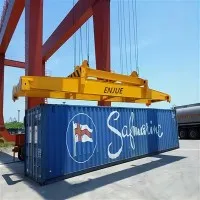
Industry Positioning: Typically housed within standard ISO containers, this type of equipment serves environments with rigorous mobility requirements-such as ports, warehouses, and storage yards-acting as a highly integrated "mobile packaging plant."
Independent Control and Synchronized Pacing: Technical Implementation of Double-Line Bagging Machines
The technical challenge of double-line bagging systems lies in balancing "independence" with "synchronization." Through the following key design features, the equipment achieves a performance synergy where the whole exceeds the sum of its parts:
"Double-Core" Architecture for Independent Operation
Each bagging machine line functions as a complete operational unit, equipped with its own independent metering and weighing system, discharge chute, bag-clamping mechanism, and sealing unit. This ensures production continuity: if one line pauses briefly for bag changes or maintenance, the other continues to operate without interruption.
Alternating Weighing and Continuous Feeding Technology
Certain high-performance dual-line systems utilize a "four-scale, two-line" configuration, featuring two metering scales per line. These scales alternate through the "feed-weigh-discharge" cycle, ensuring that pre-weighed material is always ready at the downstream filling station. This significantly reduces waiting times during the weighing phase and serves as a critical factor in achieving high-speed performance.
Flexible Workstation Cycle Design
In more complex double-line station models, workstation switching is achieved via sliding filling platforms or rotary turntables: while one station performs the filling operation, the other simultaneously handles bag placement or preparation, allowing the entire packaging process to run continuously, much like an assembly line.

Operational Workflow: How Do Dual Lines Collaborate?
From Bag Placement to Sealing - The Efficient Operational Cycle of Double-Line Bagging Machines
Based on the industry-standard double-line design concept, the standard operational cycle (assuming independent operation of both lines) is described below:
Feeding and Metering: Bulk material enters the overhead buffer hopper via screw, belt, or gravity feeding mechanisms. Within each line, the weighing system begins precise, independent, and cyclical weighing operations.
Bag Placement and Clamping (Parallel Operation): An operator (or automated device) places empty bags onto the discharge spouts of Line 1 and Line 2-either simultaneously or alternately-and the clamping mechanism automatically secures them.
Filling and Dust Removal (Alternating Operation): The pre-weighed material is discharged into the bags via chutes. Simultaneously, an integrated dust removal system activates to ensure a clean working environment.
Sealing and Discharge (Merging or Diverging): Once filling is complete, the bags are conveyed to the sealing station (for stitching or heat sealing). Finished bags from both lines can either merge onto a single main discharge conveyor or be discharged independently, offering flexibility to suit downstream palletizing or truck-loading systems.
Double-Line Containerized Bagging Machine Test Video for Reference