Shanghai ENJUE Machinery Equipment Co., Ltd is one of the most experienced manufacturers and suppliers of two-rope dredging grab in China. If you're going to buy custom two-rope dredging grab made in China, welcome to get more information from our factory. For price consultation, contact us.
Products Description
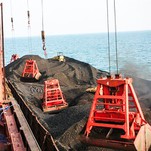
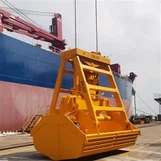
The dredging grab bucket is a highly efficient grabbing device specifically designed for underwater operations. It is suitable for complex tasks such as dredging river channels, clearing hard mud, slag, blasted reefs, and even salvaging sunken ships. It is an essential tool that performs exceptionally well in dredging, silt removal, and emergency salvage projects.
This type of mechanical dredging grab bucket features high production efficiency, robust and durable structure, easy maintenance, and flexible operation, enabling stable operation under harsh conditions. Its internal pulley system employs a multi-seal design, ensuring that even when operating at depths of tens of meters, seawater and silt will not seep into the equipment, guaranteeing long-term, reliable operation.

Features and advantages of dredging grab
1. Visual Simulation
Supports pre‑operation simulation of dredging routes and working conditions. Operators can preview the entire excavation process to optimize the construction plan and reduce on‑site trial errors.
2. Underwater Visualization Work
Equipped with underwater monitoring cameras and lighting assemblies to view real‑time underwater working footage. Operators can clearly observe sediment and grab status without blind spots during underwater operations.
3. GPS Positioning, Precise Dredging Control
A high‑precision GPS positioning system tracks the grab's position in real time. It feeds coordinate data back to the control terminal for automatic adjustment of the grab's moving trajectory.
4. Consistent Excavation Depth
The system continuously tracks and locks onto the set dredging depth. It effectively avoids over‑dredging or under‑dredging caused by water level fluctuations and vessel sway.
5. Flat Dig Control – 15cm Accuracy
The flat digging function maintains stable horizontal excavation of the seabed. It delivers a leveling accuracy of 15 cm, meeting strict requirements for channel and foundation bed leveling.
| Item | Parameters | Details |
|---|---|---|
| Grab Volume | 3 CBM | Rated loading volume |
| Power | 25 HP(~18.6 kW) | To drive the hydraulic pump station |
| Hydraulic pump flow | 45 LPM | Hydraulic system oil supply |
| Hydraulic oil tank capacity | About 170 L | Store hydraulic oil |
| work system | Continuous(Continus working) | Suitable for long working hours |
| Rated lifting capacity | 10 TON S.W.L. | SWL 10T |
| Closed length | 3220 mm | Total length when the grab is closed |

Applications of the mechanical dredging grab
Channel Construction and Maintenance
Channel Dredging: Used to excavate new channels or deepen existing channels, removing silt and sand from the seabed to ensure safe navigation.
Port Basin and Anchorage Excavation: During port expansion or construction, dredging of port basins, turning areas, and anchorages is carried out to meet the berthing needs of large vessels.
Dredging for Navigation Maintenance: Regularly removing accumulated silt and sand from channels and wharf edges to maintain the necessary water depth.
Water Environment Management and Engineering
Reservoir and Lake Dredging: Removing accumulated silt from reservoir areas to increase storage capacity and improve water quality.
River Improvement: Widening and deepening river channels, improving riverbed management, and enhancing flood control and drainage capacity.
Environmental Dredging: Precisely removing contaminated bottom silt for use in environmental remediation projects.
Special Soil Types and Obstacle Handling
Excavation of Hard Mud and Sand: Its robust structure and powerful gripping force effectively break and grab materials that are difficult for conventional equipment to handle, such as hard clay and dense sand layers.
Post-Blasting Reef Clearance: Used to clear underwater debris after blasting operations, clearing obstacles for navigation channels or infrastructure construction.
Underwater Obstacle Removal: Salvaging and removing underwater obstacles such as driftwood and discarded concrete blocks.

Emergency Salvage and Resource Recovery
Shipwreck Salvage: Leveraging its heavy-lift platform series (including the 200t-class unit referenced in the document), the system can directly grasp or assist in recovering sunken vessel hulls.
Underwater Engineering Emergency Response: Rapidly extract large-scale components or equipment that have been lost to water as a result of accidents or natural disasters.
Subsea Resource Recovery: Retrieve sunken cargo, scrap metal, and other high-value materials from the seabed.
Infrastructure Construction
Bridge Pier and Abutment Excavation: Underwater excavation of bridge foundations to remove excavated soil and rock from the pit.
Pipeline and Cable Trench Excavation: Excavation of trenches for laying underwater pipelines.
Soil Removal from Cofferdams: Underwater excavation work within cofferdam projects.
How to choose the right grab
Q1: What material do you intend to grab?
Q2: What type of grab do you need?
Q3: What type of equipment will the grab be attached to?
Q4: What is the lifting capacity of the crane?
Q5: What is the grab volume and material density?
Hot Tags: two-rope dredging grab, China two-rope dredging grab manufacturers, suppliers, factory, marine trawling equipment, movable grab bucket, trial grab bucket, new design grab bucket, brand awareness of grab bucket, Mechanical Orange Peel Grab