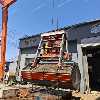
On the banks of the Cagayan River in the Philippines, an engineering vessel equipped with an ENJUE environmentally friendly dredging grab is removing riverbed sediment with millimeter-level precision. This advanced technology, introduced by a Chinese company, is being used for the first time in the management of the Cagayan River, the Philippines' largest river, marking the official entry of Philippine river management into the era of "ecological dredging.

The Cagayan River, with a total length of 352 kilometers and a drainage basin covering 25,400 square kilometers, is the lifeline of agriculture and transportation in northern Philippines. However, annual flooding during the rainy season poses a serious threat to the safety of residents along the riverbanks, while siltation in the riverbed has led to the decline of port functions and hindered the export of agricultural products.
The core equipment for this operation, the ENJUE dredging grab, achieves breakthroughs in both ecological protection and engineering efficiency through its innovative design:
Bucket sealing technology: A partially overlapping structure and rubber sealing strips, combined with a water-permeable door design, reduce sludge leakage.
Intelligent positioning system: Equipped with RTK-GPS and a high-precision sensor array, it maintains a horizontal positioning error of ±20 cm and a dredging depth error of no more than 10 cm;
Eco-navigation function of Enjue dredging grabs: The system calculates the root distribution depth of aquatic vegetation in real time and automatically adjusts the grab closing force to ensure that only contaminated sediment is removed without damaging the vegetation layer.
Application Practice of ENJUE Dredging grabs: Multiple Benefits from Flood Control to Ecological Restoration
Since the project's inception, sediment dredging has yielded significant results:
Improved Flood Control Capacity: The river's flood-carrying capacity has increased by 30%, the port of Aparri has gradually resumed its function, and a channel for exporting local agricultural products has been opened.
Ecological Restoration: Water clarity in the treated area has significantly improved, heavy metal pollution concentrations in sediment have decreased by 72%, and the coverage of native aquatic plants has significantly increased.

"When dredging grab precision achieves centimeter-level accuracy," noted an expert from the Chinese Academy of Water Resources, "we effectively become 'ecological surgeons'-capable of excising contaminated sediments while preserving healthy ecosystems intact." This sentiment was echoed by Philippine Department of Environment and Natural Resources officials, who emphasized that the project "demonstrates how engineering solutions and ecological conservation can achieve synergistic outcomes, setting a replicable benchmark for Southeast Asian nations."
The restored riverine ecosystem now sustains a thriving aquatic food web, with submerged vegetation providing critical habitats for fish and invertebrates. These ecological gains underscore a paradigm shift in river management: from conventional "one-size-fits-all" dredging to precision-guided restoration that harmonizes human engineering with natural processes.
As ENJUE dredging grab technology gains traction, the Philippines is undergoing a transformative shift from "engineering-centric" to "ecology-first" river management, offering a pioneering model for global aquatic restoration. This technological revolution in water governance has not only revitalized clogged waterways but also forged a sustainable development pathway where human innovation and ecological preservation coexist harmoniously.