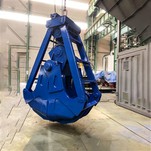
The grab bucket system operates through a coordinated mechanism involving structural components, power sources, and control systems to efficiently grasp, lift, and release materials. Here's a detailed breakdown of its working principle:
Structural Components
Shells (Jaws): The core of the system consists of two or more hinged shells (also called jaws) that open and close to grab and release materials. These shells are designed to conform to the shape of the material being handled, ensuring a secure grip.
Frame: The frame supports the shells and connects the grab bucket to the machinery, such as a crane or excavator. It provides structural integrity and stability during operation.

Hydraulic Cylinders or Mechanical Linkages: These components control the opening and closing of the shells. Hydraulic systems are commonly used for their ability to generate significant force, while mechanical linkages may rely on cables, chains, or scissor mechanisms.
Power Source
Hydraulic Systems: In hydraulic grab buckets, a motor drives a hydraulic pump, which sends pressurized oil to the hydraulic cylinders. The cylinders extend or retract to open or close the shells. Hydraulic systems are preferred for their high force output and precise control.
Mechanical Systems: Some grab buckets use mechanical power, such as cables or chains connected to a pulley system. The crane's hoisting mechanism may provide the force needed to open or close the shells.
Working Process
Opening the Bucket:
In hydraulic systems, the hydraulic cylinders retract, pulling the shells apart and opening the bucket. This allows the grab bucket to be positioned over the material to be collected.
In mechanical systems, releasing a steel cable or chain may cause the shells to open via a scissor mechanism or similar linkage.