

Analysis of Key Components of Container Tilters:
In the bulk material handling industry, container tilters (often referred to as hydraulic container tippers) have become indispensable equipment for ports, grain depots, freight yards, and industrial facilities. These machines are capable of rotating standard 20-foot or 40-foot containers by up to 90 degrees, enabling gravity-assisted loading and unloading operations; this approach maximizes space utilization while significantly reducing reliance on manual labor.
Drawing on practical engineering specifications and industry best practices, the following section provides a systematic analysis of the structural, hydraulic, electrical, and auxiliary systems that comprise heavy-duty container tilters.
Structural Steel Framework: The Load-Bearing Backbone
The mainframe is the foundation upon which all other components operate. It must withstand not only the static weight of a fully laden container (up to 55 tonnes) but also dynamic stresses during the tilting process.
Material Selection:
Main load-bearing structures are fabricated from Q345 low-alloy high-strength steel, offering superior yield strength and fatigue resistance compared to standard carbon steels.
Secondary structures-such as platforms, ladders, railings, and brackets-typically use Q235A structural steel, balancing cost and performance for non-critical applications.
Critical plate thickness for the body structure is specified at a minimum of 8 mm, with electrical control cabinets using cold-rolled steel plate no thinner than 2 mm to ensure rigidity and vibration damping.
Design Philosophy:
Structural joints are engineered as smooth transitions to avoid triaxial stress concentrations, aligning force transmission with the rolling direction of the steel plate.
Drainage holes are incorporated at all potential water accumulation points to prevent corrosion and extend service life.
The entire container tilter's metal structure is designed for a minimum operational lifespan of 10 years under continuous heavy-duty cycles.
Manufacturing Precision:
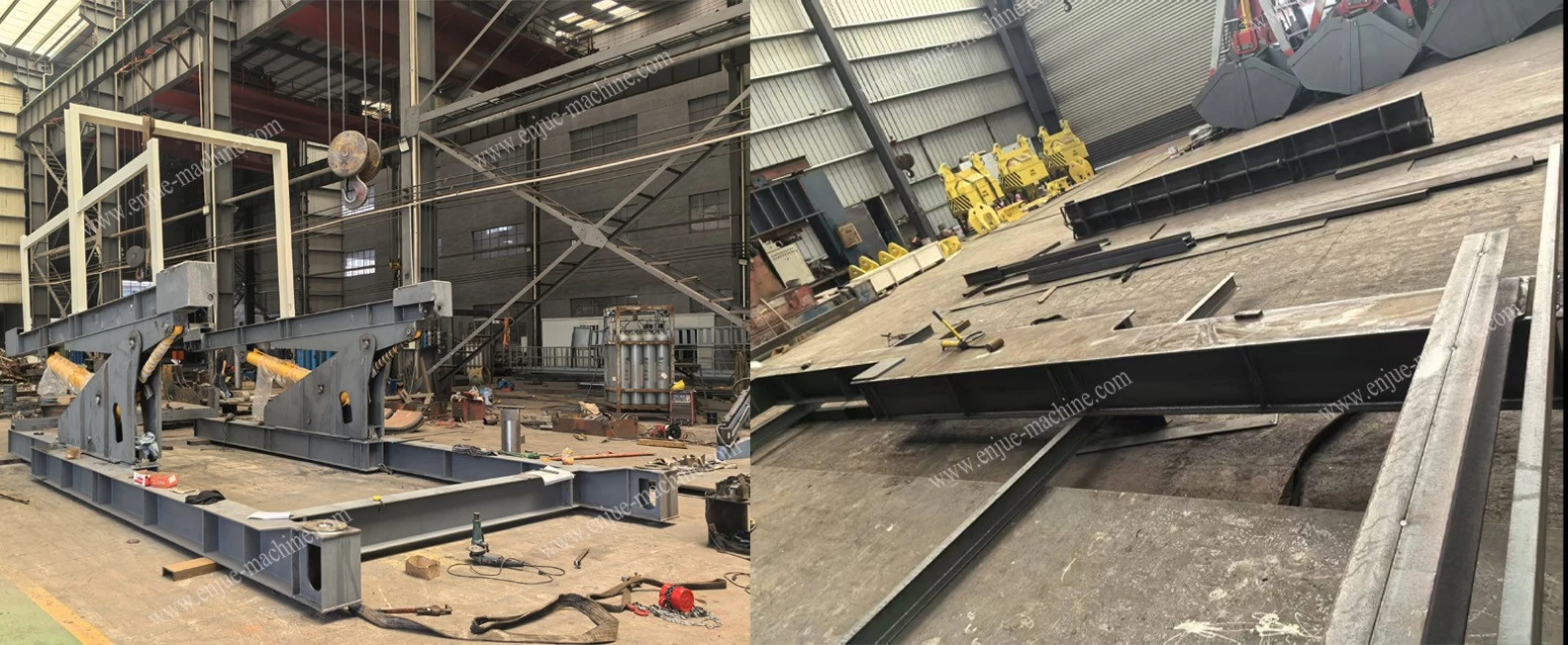
Steel plates undergo shot blasting and are coated with a weldable primer before cutting.
Plate cutting is executed via CNC or semi-automatic methods; manual cutting, when unavoidable, is strictly controlled to maintain a surface roughness of Ra < 50.
All holes are machine-drilled-torch-cutting is explicitly prohibited to ensure dimensional accuracy and structural integrity.
Hydraulic System: The Power Source
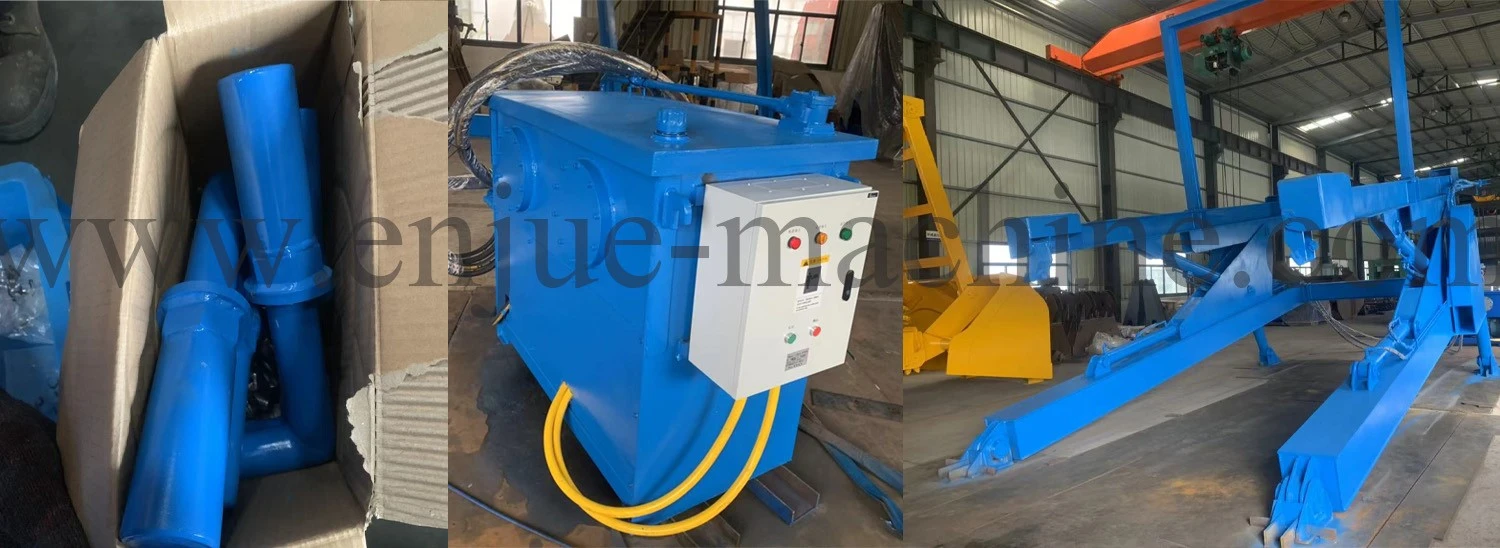
The container tilter's hydraulic system is the heart of the container tilter, providing the force required to lift, tilt, and stabilize containers weighing up to 55 tonnes. The system is designed for low noise, low vibration, and smooth, jerk-free motion.
Core Hydraulic Parameters:
System working pressure: 25 MPa
Rated flow rate: 60 L/min
Motor: 18.5 kW, Y180M-4-B35 type, IP44 protection, F-class insulation, operating at 1,460 rpm
Hydraulic Component Sourcing (Premium Tier)
Pump: Parker (USA) or Rexroth (Germany) - globally recognized for volumetric efficiency and durability.
Explosion-proof and synchronous valves: SUN (USA) - ensuring safe operation even under sudden pressure surges.
Hydraulic hoses: EATON (USA) or Manuli (Italy) - rated for high-pressure cycles and abrasion resistance.
Seals: Parker (USA) - critical for leak-proof performance over extended temperature ranges (-20°C to +50°C).
Hydraulic steel pipes: EATON (USA) - providing rigid, corrosion-resistant fluid pathways.
Filters and filter elements: Liming (China) - maintaining oil cleanliness to ISO standards.
Hydraulic oil: Great Wall HLP46# - anti-wear, anti-foam, and thermally stable.
The entire hydraulic circuit incorporates dual safety locks-including counterbalance valves and pilot-operated check valves-to prevent unintended container descent in case of hose failure.
Electrical Control System: Intelligence and Safety
The electrical system governs motor operation, valve actuation, safety interlocks, and user interface. It is engineered for reliable performance in harsh industrial environments.
Distribution and Protection:
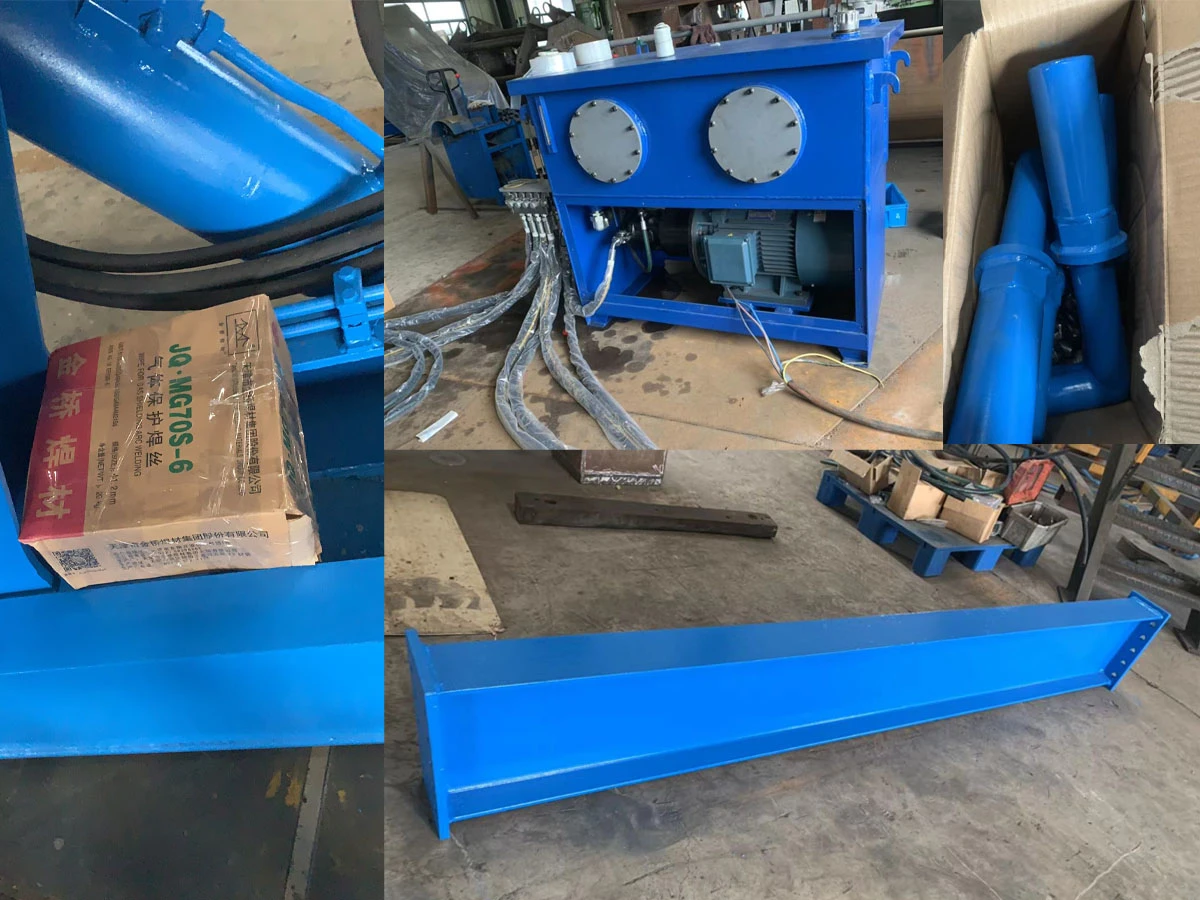
Distribution cabinet: IP55-rated, placed on the second-floor inspection platform, fabricated from 2.5 mm cold-rolled steel, painted in RAL1019 camel gray.
The container tilter is equipped with circuit breakers, knife switches, ammeters, and voltmeters.
Low-voltage electrical components: Schneider Electric - industry standard for reliability.
Cable laying: galvanized steel conduits, with conduit fill not exceeding the cross-section area; bending radii comply with national standards.
Cable connections: IP66 industrial plugs for dust and moisture resistance.
Electrical Protections (Comprehensive Safeguards):
Short-circuit protection
Overload protection
Phase-loss protection
Stall protection
Leakage protection (earth fault)
Locking and Positioning Mechanism: Precision and Safety
Accurate container engagement is paramount. The container tilter employs a multi-point locking system to ensure the container remains firmly attached throughout the tilting cycle.
Side and rear locking pins are actuated by dedicated hydraulic cylinders (50/25-188 and 50/25-88 respectively), inserting into the container's corner castings - the same ISO-standard interfaces used by spreaders and twistlocks.
The base opening/closing mechanism (translation cylinders, 100/70-780) allows the two arms to open up to 3,500 mm, accommodating semi-trailer entry. Once the vehicle is positioned, the arms close appropriately to align with the container's longitudinal axis.
An integrated dynamic center-of-gravity monitoring system (using pressure sensors and inclinometers) ensures that asymmetrical loads are detected in real time, preventing over-tilt or structural overload.
Auxiliary and Consumable Components
Seals and O-rings: All sourced from Parker (USA), ensuring leak-free operation across the entire hydraulic circuit.
Hydraulic Fluids: HLP46# anti-wear hydraulic oil from Sinopec (Great Wall brand), with regular filtration to maintain ISO cleanliness levels.
Fasteners: All exposed bolt-nut assemblies are zinc-plated or otherwise rust-protected. High-strength friction-grip bolts (conforming to GB/T1231-91) are used for critical structural connections.
Paint and Corrosion Protection:
The entire structure undergoes shot blasting (Sa 2.5 grade) before primer application.
Painting follows the JQ/NG-28-1-92 general procedure, with a total dry film thickness designed for at least 10 years of corrosion resistance under marine or industrial atmospheres.
The container tilter is far more than a simple steel frame with hydraulic rams. It is a meticulously engineered system where structural metallurgy, hydraulic precision, electrical intelligence, and safety redundancy converge to deliver reliable, high-efficiency bulk material handling.


