

Both standard hoppers and dust extraction hoppers are widely deployed at port terminals, processing plants, and bulk cargo transshipment yards as common auxiliary equipment for material loading, unloading, and conveying. Though similar in appearance and applicable to largely the same types of materials and operating environments, what key points should be considered during procurement?
What is the standard Port hopper?
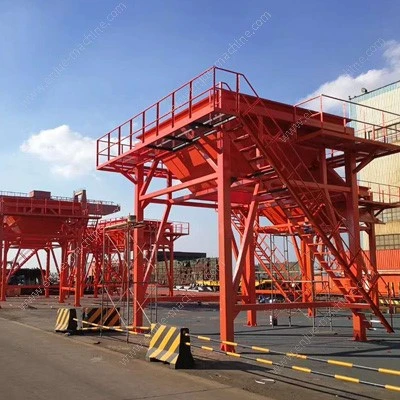
Standard hoppers are fundamental material storage and diversion equipment used on bulk material conveying lines at ports and factories. They feature a simple structure with thin steel plates, resulting in lower manufacturing costs.
This equipment performs basic functions, including receiving incoming materials, cushioning falling materials, and guiding material flow to ensure normal unloading and transfer of ores, grains, sand, gravel, and other granular or powdery cargoes. No dust-proof or dust-extraction structures are incorporated at the factory.
What is the Eco hopper?
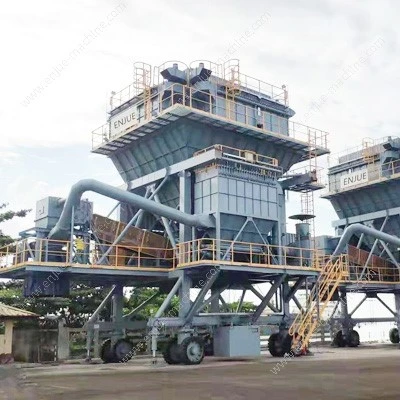
The Dust Collection Hopper is a specialized unloading unit engineered for dusty working conditions involving powder and fine granular bulk cargo. It retains the basic functions of conventional hoppers for material receiving and flow guiding.
All welding seams and joint interfaces are fully sealed. Standard dust extraction ports are pre-reserved on the hopper body, and internal buffer baffles are installed. The hopper can be externally connected to baghouse dust collectors or negative‑pressure dust suction systems, which instantly extract dust generated during material falling and curb dust diffusion at the source.
Standard hopper VS Eco hopper
| Feature | Standard port hopper | Eco hopper |
| Dust Control capability | Minimal reliance on gravity discharge | Advanced dust control system (filter screen, enclosed discharging) |
|
Energy Efficiency |
Standard Energy Consumption | Optimized for Energy-Saving Operation |
| Environmental Friendliness |
Risk of environmental pollution |
Designed to comply with environmental standards (ISO, OSHA) |
| Auxiliary System | Operates independently without the need for additional dust collection systems. | Equipped with a complete dust removal system, including a bag filter, induced draft fan, and dust extraction ducts. |
| Application Suitability | Designed for bulky and low-dust materials, suitable for standard operations without dust control requirements. | Applicable to powdery materials and fine granules; suitable for clean workplaces with mandatory dust extraction and environmental compliance standards. |
| Cost | Lower initial investment | Higher upfront cost, long-term savings |
| Maintenance | Moderate, routine maintenance | Requires filter replacement and periodic maintenance |
please watch the video of the working process:https://www.facebook.com/reel/1662170394854108
The advantage and disadvantage of each hopper
standard hopper
Simple structure, low cost, easy installation and disassembly, extremely low failure rate, high versatility. Suitable for the vast majority of conventional material conveying applications, with virtually no ongoing maintenance costs.
Lacks any dust-proof or dust-collection capabilities. When handling fine materials or powders, severe dust emissions occur, polluting the workshop environment and endangering operator health. Prolonged use leads to dust accumulation and accelerated equipment wear, and the unit cannot meet environmental compliance standards.

Eco hopper
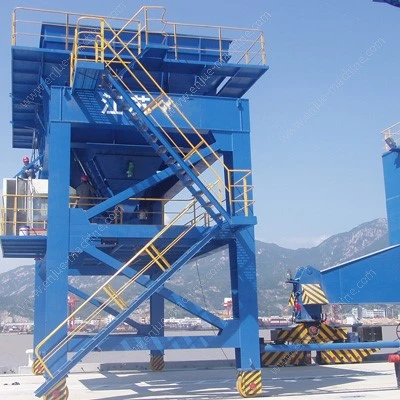
Suppresses dust emissions at the source. Delivers effective dust-free operation, improves the workshop production environment, reduces dust accumulation and wear on equipment, and mitigates the risk of environmental penalties. Ideal for production lines requiring high precision and stringent environmental standards.
More complex structure with higher procurement and installation costs. Requires auxiliary dust-collection equipment to operate in tandem. Demands periodic filter media cleaning and inspection of dust extraction piping, resulting in moderate ongoing maintenance requirements.
How to choose standard hopper and Eco hopper
When to Choose the Standard Hopper
The standard hopper is the ideal choice for handling coarse, lumpy, or blocky materials that generate little to no dust during transfer. It is best suited for production environments without strict dust emission regulations, where the material drop height is limited and the conveying process remains stable-eliminating the need for dust suppression.
When to Choose the Dust-Controlled Port Hopper
The dust-controlled hopper is specifically designed for powders, fine granules, and highly dust-prone materials such as lime powder, cement, graphite, and food powders. It is essential in applications where significant drop heights and high-speed feeding create substantial dust emissions, and particularly where the workshop is subject to environmental compliance audits and demands a truly dust-free working environment.
Conclusion
Standard hoppers focus on basic material guidance and cost-effectiveness, serving as fundamental components for production lines with no dust control requirements. Dust removal hoppers feature dust-free operation and optimized working conditions, acting as special accessories for production lines handling dusty materials and complying with standardized environmental protection norms.
The core difference between the two lies not in their appearance, but in dust extraction configurations and functional positioning. When selecting equipment, there is no need to blindly opt for high-end dust removal hoppers, nor should standard hoppers be overused merely to cut costs. The selection shall be precisely matched according to material properties, production working conditions and environmental compliance requirements, balancing production efficiency, costs and environmental regulatory compliance.
If you have any questions or are interested in purchasing a hopper or related equipment, feel free to reach out to us. We're here to help you find the right solution for your needs.


