Operation Mechanism
Mechanical Grab:
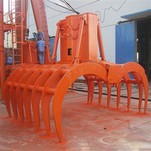
Operates through direct mechanical linkage (e.g., hydraulic cylinders, cables, or levers). Its movement is physically coupled to the operating machinery (e.g., a crane or excavator). For example, a hydraulic grab uses fluid pressure to open/close jaws, while a cable-operated grab relies on winches and pulleys.
Limitation: Requires continuous manual input from an operator to adjust grip strength or position.
Remote Control Grab:
Uses electronic or wireless systems (e.g., radio frequency, Bluetooth, or tethered cables) to transmit commands. Operators control it remotely using a joystick, touchscreen, or automated software.
Advantage: Enables precise, real-time adjustments without direct physical contact with the equipment.

Control System: difference between Mechanical grab and remote control grab
Mechanical Grab:
Relies on manual dexterity and operator experience. Changes in grip force or direction depend on the operator's ability to manipulate levers or pedals.
Example: A construction worker adjusting a hydraulic grab's angle while visually monitoring the load.
Remote Control Grab:
Integrates sensors, cameras, or AI algorithms for enhanced control. Some models use force feedback or haptic technology to simulate tactile sensations remotely.
Advanced Feature: Autonomous gripping based on load weight or material type (e.g., scrap metal vs. loose gravel).