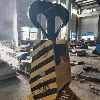
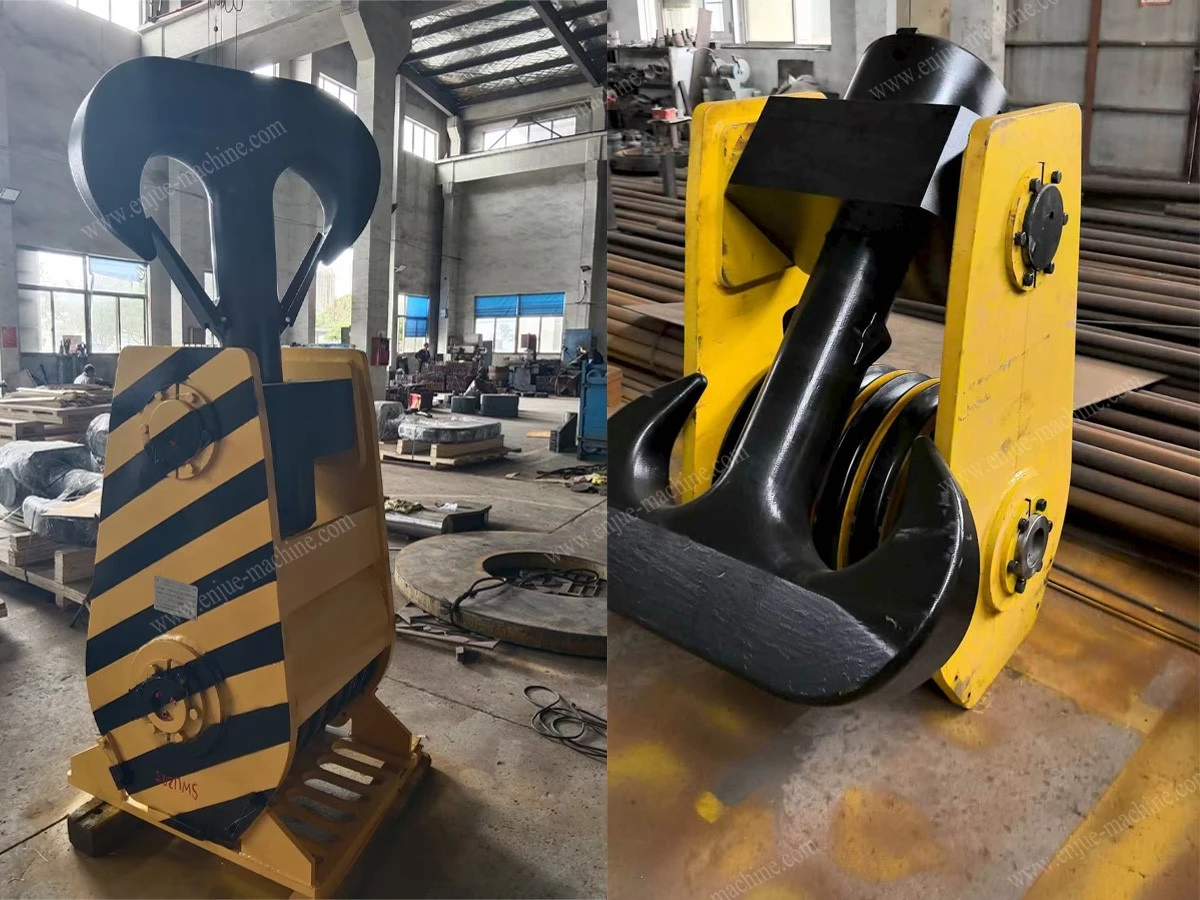
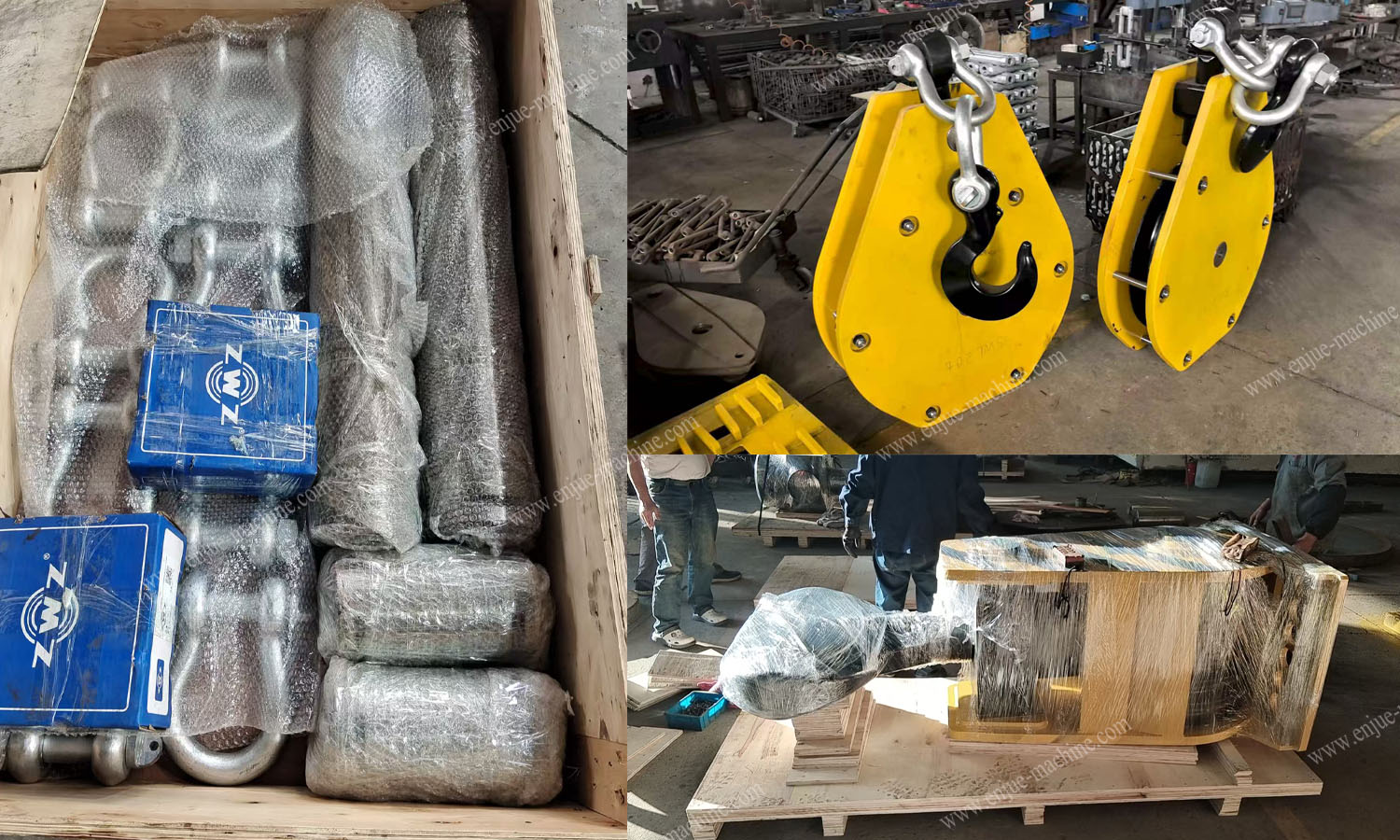
The 120t crane mechanical hook delivered in this shipment is manufactured through an integral forging process using high-strength alloy steel, and has undergone rigorous heat treatment and non-destructive testing to ensure structural integrity and fatigue life under extreme load conditions. The hook body design fully accounts for Chile's high-temperature, high-dust operating environment, featuring a heavy-duty anti-corrosion coating system on the surface and added wear-resistant treatment on critical load-bearing areas, effectively extending maintenance intervals.
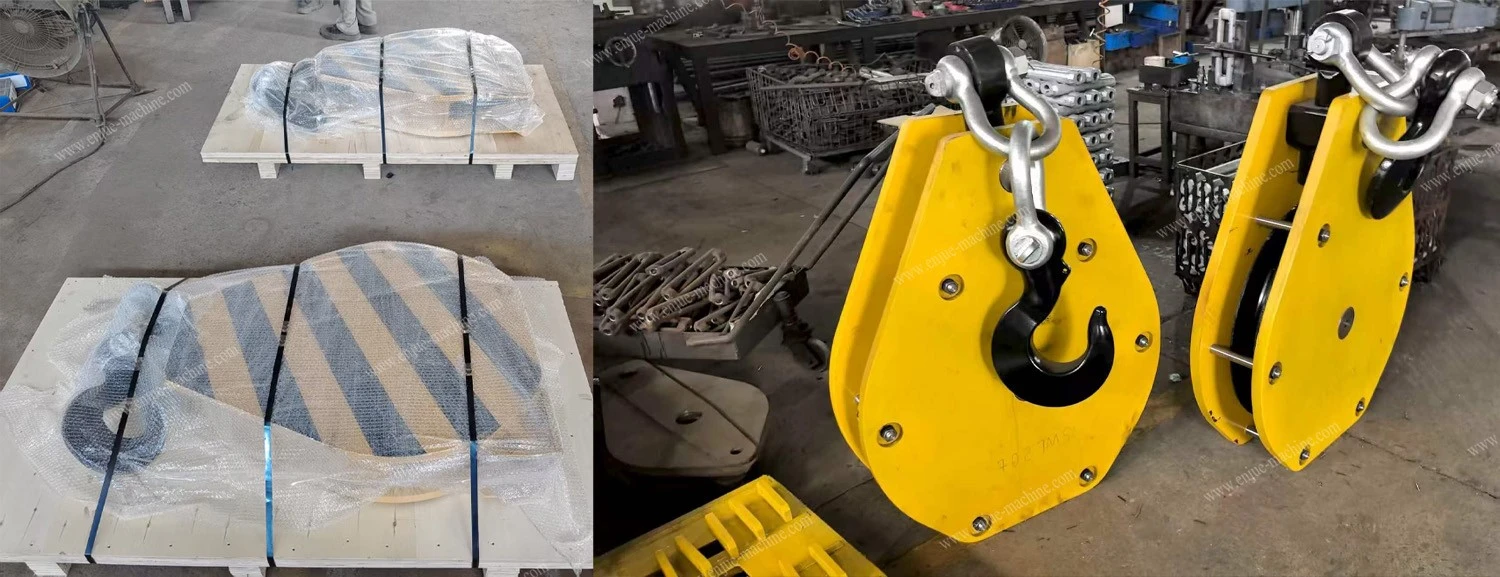
The 20t crane hook adopts a lightweight design approach, optimizing the hook body's geometry while maintaining safety factors to reduce the hook's own weight and its impact on the crane's effective payload capacity. Both hooks are equipped with safety latches and anti-detachment devices compliant with international standards, and are pre-fitted with load monitoring sensor interfaces, facilitating the customer's future integration into an intelligent lifting management system.
Notably, in response to the specific operating conditions of the customer's crane retrofit, the technical team made customized adjustments to the hook opening dimensions, rotation mechanism, and connection interfaces, ensuring seamless compatibility with the original crane's pulley blocks, wire ropes, and control systems. "We are not simply selling a standard component, but providing a solution deeply integrated with the customer's equipment," said the project technical lead.
Mining Recovery in South America Drives Retrofit Demand
As the world's largest copper producer, Chile has seen a sustained recovery in its mining and heavy logistics sectors in recent years, placing higher demands on the safety and operational efficiency of lifting equipment. The Chilean customer in this cooperation is a sizable local industrial lifting service provider whose fleet includes multiple cranes in service for years, now facing issues such as aging critical components and insufficient rated load capacity. After multiple rounds of technical exchange and solution comparison, the customer ultimately decided to carry out a systematic retrofit of its existing cranes and selected ENJUE Machine to supply the core hook assemblies.
According to the project manager, the customer's core objective for this retrofit is "to achieve precise load capacity matching and enhanced safety redundancy through key component upgrades, without replacing the entire crane." The crane's 120t mechanical hook will upgrade the main heavy-lift cranes for lifting heavy equipment and steel structures; the 20t hook will pair with medium and small cranes for daily mineral handling and auxiliary operations. The two tonnage classes form a tiered configuration that covers the vast majority of the customer's operating scenarios.
Technical Highlights: Dual Assurance of Forging Craftsmanship and Safety Design
The 120t suspension hook delivered in this shipment is manufactured through an integral forging process using high-strength alloy steel, and has undergone rigorous heat treatment and non-destructive testing to ensure structural integrity and fatigue life under extreme load conditions. The hook body design fully accounts for Chile's high-temperature, high-dust operating environment, featuring a heavy-duty anti-corrosion coating system on the surface and added wear-resistant treatment on critical load-bearing areas, effectively extending maintenance intervals.
The 20t slewing units adopt a lightweight design approach, optimizing the hook body's geometry while maintaining safety factors to reduce the hook's own weight and its impact on the crane's effective payload capacity. Both hooks are equipped with safety latches and anti-detachment devices compliant with international standards, and are pre-fitted with load monitoring sensor interfaces, facilitating the customer's future integration into an intelligent lifting management system.
Notably, in response to the specific operating conditions of the customer's crane retrofit, the technical team made customized adjustments to the hook opening dimensions, rotation mechanism, and connection interfaces, ensuring seamless compatibility with the original crane's pulley blocks, wire ropes, and winch systems. "We are not simply selling a standard component, but providing a solution deeply integrated with the customer's equipment."
Production and Shipping: Full-Process Quality Control Safeguards Delivery
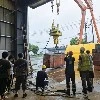
During order execution, the company's production and quality departments worked closely together, strictly implementing the quality management system standards throughout the entire process-from incoming material re-inspection and forging process control to machining precision inspection and load test verification. Before leaving the factory, the 120t hook completed static load tests at rated capacity and dynamic load tests at rated capacity, with all indicators meeting design requirements.
The shipping stage likewise reflected meticulous responsiveness to customer needs. Given the long ocean freight cycle and the handling conditions at Chilean ports, the logistics team customized reinforced wooden crating for the hooks, added protective padding to critical areas of the hook bodies, and enclosed detailed installation guides and maintenance video materials with each crate. After departure from the domestic port, the cargo is expected to arrive at the Port of San Antonio, Chile, after approximately 30 days of ocean transport, and will then be arranged by the customer for overland delivery to the project site.
Market Significance: Chinese Lifting Equipment Deepens Presence in South America's High-End Market
In recent years, as demand for equipment renewal continues to be released across South America's mining, port, and energy sectors, Chinese heavy lifting equipment and supporting components have steadily expanded their market share, leveraging advantages in cost-effectiveness and delivery efficiency. The successful export of the 120t-class heavy-duty mechanical hook for cranes further validates the company's technical strength and international certification standards in the high-tonnage, high-value-added hook segment.
ENJUE stated: "The Chilean customer's choice reflects their trust in our product quality and service capabilities. Going forward, we will continue to iterate our products around the principles of 'customization, intelligence, and safety,' delivering more reliable lifting solutions to customers worldwide." It is understood that the company is currently in discussions with several South American customers regarding follow-up hook procurement and technical service cooperation, and the South American region is expected to become a key growth engine for its overseas business.
Outlook: From Single Components to System-Level Services
Industry observers note that demand for core components such as the mechanical hooks in the crane retrofit market is evolving from "standardized replacement" toward "operating-condition adaptation plus data connectivity." The sensor interfaces reserved in this delivery lay the groundwork for upgrading the hook from a passive load-bearing component to an intelligent monitoring node. It is foreseeable that, as IoT technology penetrates the lifting industry, intelligent hooks with real-time load monitoring and life prediction capabilities will become the next market hotspot.
As this batch of 120t and 20t hooks sails across the Pacific, they carry not merely a cross-border order, but a vivid testament to Chinese manufacturing's participation in global industrial upgrading through technical strength and service sincerity. At the Chilean customer's crane retrofit site, these two sets of hooks are about to begin their "service" careers after their long voyage across the ocean-while the story of China-Chile industrial cooperation behind them continues to write new chapters.