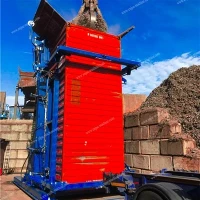
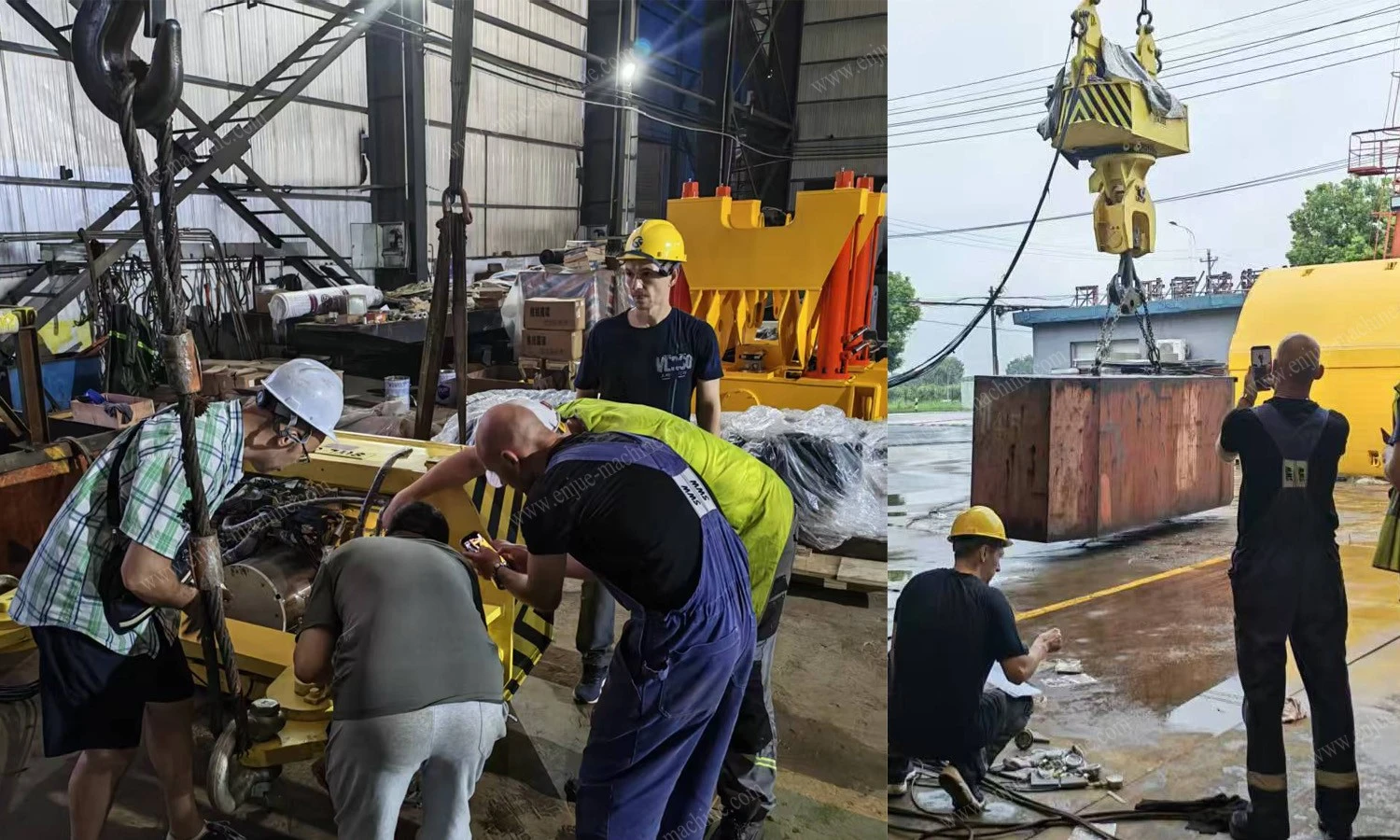
Following four days of rigorous testing and evaluation by the Russian client's professional quality inspection team, the hydraulic ultra-low-temperature swivel hook-jointly developed by Shanghai Enjue Machinery (ENJUE) and the client's team-has officially passed acceptance. This milestone achievement marks a significant breakthrough for high-end Chinese port crane components in extreme low-temperature operating environments, offering a reliable Chinese solution for heavy-duty lifting operations at Russian ports and along Arctic shipping routes.
Four-Day Rigorous Testing of the slewing units
Comprehensive Validation from Load Capacity to Low-Temperature Performance
A professional technical team dispatched by the Russian client led this quality inspection, covering key performance indicators of the rotating hook under simulated extreme cold conditions. Over the four-day testing period, the team systematically evaluated critical parameters, including rated load capacity, rotational precision, sealing reliability, and cold-start responsiveness.
The Russian client's quality inspection lead stated that the rotating hook for the port crane underwent repeated testing for rotational torque, braking response, and hydraulic system stability in a -40°C environment, with all data meeting or exceeding design specifications. Notably, during continuous high-load operation tests, the hook maintained rotational precision within design tolerances, with no instances of mechanical binding or seal failure.
During R&D, the ENJUE technical team focused on key performance metrics such as rated load, rotational torque, and braking response speed. The final electric-hydraulic crane matches the performance specifications of comparable SMAG models while maintaining excellent compatibility in terms of mounting interfaces and technical specifications; it can be directly installed on various gantry cranes at customer facilities, offering users an alternative solution that delivers equivalent performance and greater supply chain resilience.
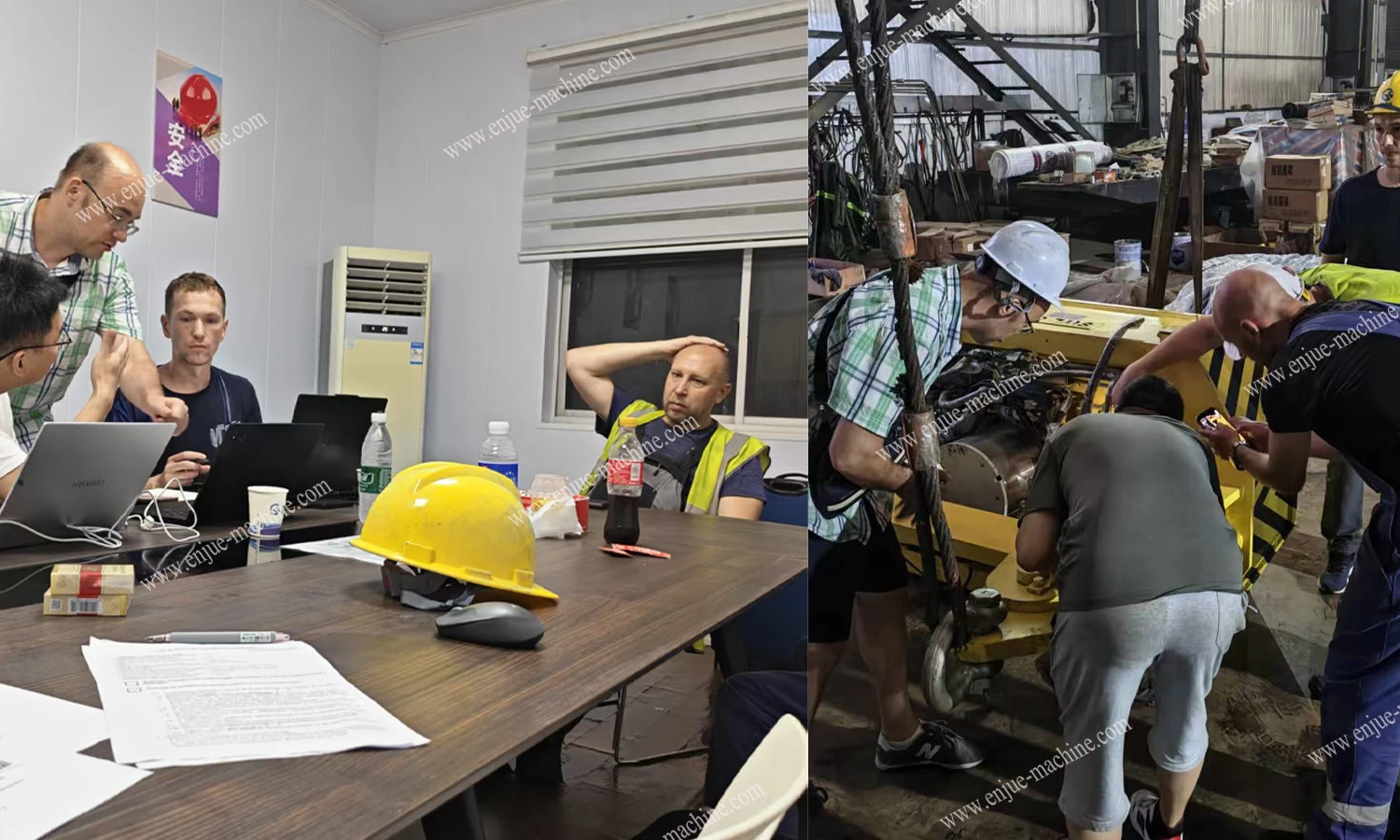
Joint R&D by China and Russia: A Synergy of Engineering Expertise for Extreme Cold Conditions
The technological breakthroughs achieved in this electric-hydraulic hook stem from the deep integration of engineering expertise from both China and Russia. As an established domestic manufacturer of port equipment and lifting accessories, ENJUE possesses extensive technical capabilities in electro-hydraulic system integration, precision die forging, and heat treatment processes, backed by a comprehensive database regarding the dynamic characteristics and fatigue life of slewing mechanisms under heavy-load conditions.
The team of senior Russian experts contributed invaluable data on applications in extreme cold and practical engineering experience with low-temperature operations. Through collaborative R&D, the partners systematically optimized the design to address three persistent industry challenges associated with electro-hydraulic rotating hooks for portal cranes in port operations: mechanism jamming under heavy-load, high-frequency conditions; sealing system failure in extreme cold; and difficulties in initiating hydraulic operations at low temperatures.
Technically, the team deeply optimized the hydraulic system's fundamental design of the slewing units, significantly enhancing the stability and tracking precision of the hook's rotation. Simultaneously, specialized cold-resistance enhancements were implemented for electrical control components-covering the entire chain from component selection and protection to layout-to ensure stable signal transmission and operational reliability amidst drastic temperature fluctuations.
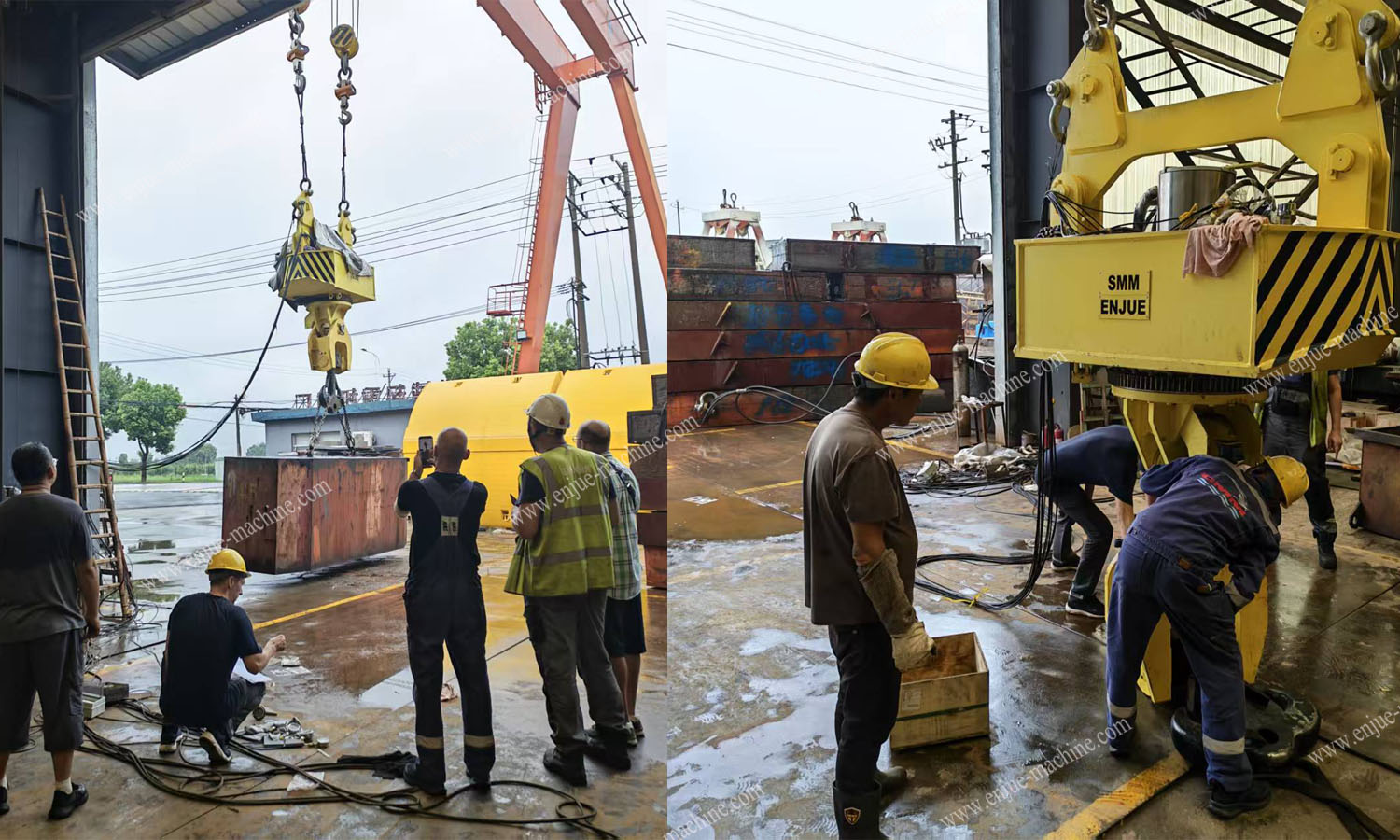
A Rigorous -40°C Benchmark: Systematic Breakthroughs in Materials and Manufacturing
The electric-hydraulic rotating hook for portal cranes' most prominent technical feature is its adaptability to ultra-low-temperature environments of -40°C; this capability serves as its core competitive advantage over similar products.
Achieving this level of performance did not rely on a single technological breakthrough but rather on the systematic integration of multiple disciplines, including materials science, heat treatment processes, structural mechanics design, and hydraulic sealing systems. During material development, the team strictly implemented vacuum degassing and refining processes during smelting to further purify the molten steel and minimize the disruption of matrix continuity caused by non-metallic inclusions. According to industry standards and technical literature, low-temperature impact toughness at -40°C is a critical indicator for assessing the safety of hook materials in cold environments; this product has undergone multiple independent verifications by third-party testing agencies, consistently demonstrating performance that exceeds design specifications.
In the manufacturing phase, ENJUE electric-hydraulic crane hooks employ advanced heat treatment processes specifically developed for low-temperature steel grades. By utilizing sub-critical normalizing and tempering-and precisely controlling holding times within specific temperature ranges-the process imparts excellent low-temperature toughness while maintaining material strength. This manufacturing approach ensures the hook's resistance to brittle fracture under extreme cold, providing a fundamental safety guarantee for continuous winter operations at Russian ports.
Russian ports generally operate in environments characterized by prolonged low temperatures, high humidity, intense salt-spray corrosion, and heavy dust, placing extremely high demands on the reliability of lifting equipment.
Driven by the continued growth of cross-border logistics between China and Russia and the advancement of major infrastructure projects along the Arctic shipping route, heavy-duty lifting slewing units capable of stable operation at -40°C have become an essential requirement for Russian ports.
The hydraulic ultra-low-temperature rotating hook that has just passed acceptance testing was developed specifically to meet this market demand. Its 360-degree continuous rotation capability allows for precise adjustment of the load's orientation, significantly enhancing cargo handling efficiency, while its dual braking system ensures the load remains securely locked even during a power failure, further guaranteeing operational safety.
The successful passing of rigorous quality inspections by a Russian client for ENJUE's hydraulic ultra-low-temperature electric-hydraulic hook signifies more than just the delivery of a single product; it marks a milestone for Chinese enterprises in the field of core port crane components-a leap from merely being "functional" to matching world-class standards.
For a long time, the market for high-end hydraulic rotary hooks was dominated by international brands such as Germany's SMAG, leaving domestic port operators to contend with issues like high prices, long lead times, and slow after-sales service responses. Through a joint Sino-Russian R&D model, ENJUE has established a more resilient supply chain while ensuring performance parity with top-tier competitors, thereby offering users a practical and viable alternative.