

Hey there! As a supplier of Single Rope Grab Buckets, I've had a fair share of experiences in understanding and testing the performance of these nifty pieces of equipment. In this blog, I'll walk you through how you can test the performance of a single rope grab bucket.
Understanding the Basics
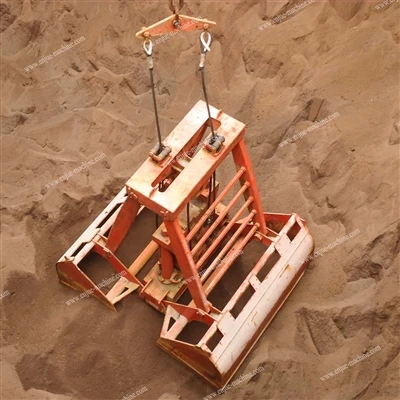
First off, let's quickly go over what a single rope grab bucket is. It's a type of grab bucket that operates with just one rope. This simplicity makes it a popular choice for many applications, especially in situations where space or equipment complexity is a concern. It's commonly used in industries like mining, construction, and marine operations for handling bulk materials such as sand, gravel, and coal.
Pre - Test Checks
Before you start any performance tests, it's crucial to conduct a thorough pre - test inspection. Check the physical condition of the grab bucket. Look for any signs of wear and tear on the jaws, the rope, and the connecting parts. Make sure all the bolts and nuts are tightened properly. A loose connection can lead to inaccurate test results and even pose a safety risk.
Inspect the rope for fraying, kinking, or any other damage. The rope is the lifeline of the single rope grab bucket, and any issues with it can significantly affect its performance. If you notice any problems, it's best to replace the damaged parts before proceeding with the test.

Capacity Testing
One of the most important performance aspects of a single rope grab bucket is its capacity. To test the capacity, you'll need to fill the bucket with the material it's designed to handle. For example, if it's a grab bucket for handling sand, fill it with sand.
Weigh the material before filling it into the bucket. Then, carefully operate the single rope grab bucket to fill it to its maximum capacity. Make sure the material is evenly distributed inside the bucket. Once the bucket is filled, weigh the bucket along with the material. Subtract the weight of the empty bucket to get the actual weight of the material it can hold.
Compare this weight with the manufacturer's specified capacity. If there's a significant difference, it could indicate a problem with the bucket's design or construction. Maybe the jaws aren't closing tightly enough, or there's an issue with the volume of the bucket. You might want to check out 1/2 Rope Clamshell Grab for different capacity options if you find your current single rope grab bucket isn't meeting your needs.
Closing and Opening Efficiency
The efficiency of the closing and opening mechanism is another critical factor in the performance of a single rope grab bucket. To test this, you can use a stopwatch.
Start by operating the bucket to open it fully. Once it's open, start the stopwatch. Then, initiate the closing process and stop the stopwatch as soon as the bucket is fully closed. Repeat this process several times to get an average time for the closing operation.
Do the same for the opening process. Measure the time it takes for the bucket to open from a fully closed position. A slow closing or opening time can indicate problems with the hydraulic system (if it's a hydraulic - operated grab bucket) or mechanical parts.
If you're facing issues with the closing and opening efficiency, you might consider looking at Leak Proof Remoto Contarol Grab, which may offer better control and faster operation.
Material Retention
A good single rope grab bucket should be able to hold the material it picks up without significant leakage during transportation. To test the material retention, fill the bucket with the material and lift it to a certain height.
Hold the bucket in the air for a short period, say around 30 seconds to a minute. Observe if there's any material falling out of the bucket. If there is, check the jaws for proper alignment and sealing. A poorly sealed bucket can lead to material loss, which is not only wasteful but can also be a safety hazard in some environments.
For applications where material retention is of utmost importance, Dredging Grabs might be a better option as they are designed to handle materials in wet and challenging conditions with better sealing.
Durability Testing
Durability is key when it comes to single rope grab buckets. You can simulate real - world usage to test the durability. One way is to perform a high - cycle test. Operate the grab bucket continuously for a large number of cycles, say 100 - 200 cycles.
During these cycles, monitor the bucket for any signs of fatigue, such as cracks in the metal parts or excessive wear on the moving components. If you notice any issues, it might be a sign that the bucket's construction material or design needs improvement.
If you need a more robust option for heavy - duty applications, Two - rope Dredging Grab could be considered as it is often built to withstand more rigorous use.
Operational Smoothness
The single rope grab bucket should operate smoothly without any jerks or sudden movements. To test the operational smoothness, operate the bucket through different motions, such as opening, closing, and lifting.
Pay attention to the sound it makes during operation. Any unusual noises, such as grinding or rattling, can indicate problems with the internal components. Additionally, feel the operation through the control mechanism. If there's any resistance or unevenness, it could be a sign of issues with the mechanical or hydraulic parts.
For a smoother - operating grab bucket option, you might want to look into Mechanical Clamshell Grab, which often offers more precise control and smoother operation.
company profile

Conclusion
Testing the performance of a single rope grab bucket is essential to ensure that it meets your requirements and operates safely and efficiently. By conducting capacity, closing and opening efficiency, material retention, durability, and operational smoothness tests, you can get a comprehensive understanding of the bucket's performance.
If you're in the market for a single rope grab bucket or need advice on performance testing, don't hesitate to reach out. We're here to help you find the right solution for your needs. Whether you're handling light - duty or heavy - duty materials, we have a range of options to suit your specific requirements.


