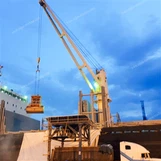
As a supplier of Scissor Grab equipment, I've often encountered concerns from clients regarding the safety of this machinery. The question "Is Scissor Grab a dangerous move?" is one that requires a comprehensive and scientific analysis. In this blog, I'll delve into the various aspects of Scissor Grab operations, weighing the potential risks against the safety measures in place, and provide an informed perspective on its safety profile.
Understanding the Scissor Grab
Before we assess the safety of Scissor Grab, it's essential to understand what it is and how it functions. A Scissor Grab is a type of grab bucket used primarily in material handling applications, especially in ports, mines, and construction sites. It consists of a set of jaws that open and close in a scissor - like motion to grasp and lift materials such as coal, ore, sand, and gravel. The mechanism is typically powered by hydraulic or electro - hydraulic systems, which provide the necessary force to operate the jaws.
Potential Risks Associated with Scissor Grab
Like any heavy machinery, Scissor Grab does carry certain risks. One of the most significant risks is related to the powerful gripping force of the jaws. If an operator is not careful, there is a potential for body parts to get caught between the jaws during operation. This can lead to severe injuries, including fractures, amputations, and crush injuries.


Another risk is associated with the lifting capacity of the Scissor Grab. Overloading the grab can cause instability, leading to the load slipping or the entire equipment tipping over. This not only endangers the operator but also those in the vicinity. In addition, the hydraulic or electro - hydraulic systems powering the Scissor Grab can malfunction. Leaks in the hydraulic system can lead to a loss of pressure, which may cause the jaws to open unexpectedly or fail to close properly. Electrical malfunctions in electro - hydraulic grabs can also pose a risk of electric shock to the operator.
Safety Measures in Place
Despite these potential risks, there are numerous safety measures in place to mitigate them. First and foremost, proper training is essential for all operators. Operators should be thoroughly trained on the operation, maintenance, and safety procedures of the Scissor Grab. This includes understanding the equipment's load capacity, how to operate the controls safely, and what to do in case of an emergency.
Most modern Scissor Grabs are equipped with safety features such as overload protection devices. These devices prevent the grab from being overloaded by automatically shutting off the lifting mechanism when the load exceeds the specified capacity. Additionally, many Scissor Grabs have safety guards installed around the jaws to prevent accidental contact with body parts.
Regular maintenance is also crucial for ensuring the safe operation of the Scissor Grab. This includes checking the hydraulic or electro - hydraulic systems for leaks, inspecting the jaws for wear and tear, and testing the safety devices regularly. By following a strict maintenance schedule, potential problems can be identified and addressed before they become serious safety hazards.
Industry Standards and Regulations
The use of Scissor Grab is regulated by various industry standards and regulations. These standards ensure that the equipment is designed, manufactured, and operated in a safe manner. For example, the International Organization for Standardization (ISO) has developed standards for grab buckets, including Scissor Grabs. These standards cover aspects such as design requirements, safety features, and testing procedures.
In addition, local and national regulations also play a role in ensuring the safety of Scissor Grab operations. These regulations may require operators to have specific licenses or certifications, and they often mandate regular inspections of the equipment. By adhering to these standards and regulations, the risk of accidents can be significantly reduced.
Comparing with Other Grab Buckets
When considering the safety of Scissor Grab, it's also useful to compare it with other types of grab buckets. For example, the Clamshell Grab Bucket For Coal and the Electro Hydraulic Grab Bucket are also commonly used in material handling.
Clamshell grab buckets have a different design compared to Scissor Grabs. They consist of two or more hinged shells that open and close to grab the material. While they also have their own set of risks, such as the potential for the shells to get jammed or for the load to fall out during lifting, the scissor - like motion of the Scissor Grab provides a more stable grip in some cases.
Electro - hydraulic grab buckets, on the other hand, share some similarities with Scissor Grabs in terms of the power source. However, the design and operation of the jaws may vary. The Clamshell Bucket For Crane is another type that is often used in crane - based material handling. Each type of grab bucket has its own advantages and disadvantages in terms of safety, and the choice depends on the specific application and the safety requirements of the job.
Conclusion
In conclusion, while Scissor Grab does carry certain risks, it is not inherently dangerous when proper safety measures are in place. The potential risks associated with the powerful gripping force, overloading, and system malfunctions can be effectively mitigated through operator training, safety features, regular maintenance, and adherence to industry standards and regulations.
As a Scissor Grab supplier, we are committed to providing high - quality equipment that meets all safety standards. We also offer comprehensive training and support to our clients to ensure that their operators can use the equipment safely and efficiently.
If you are in the market for a Scissor Grab or any other type of grab bucket, such as the Clamshell Grab Bucket For Coal, Electro Hydraulic Grab Bucket, or Clamshell Bucket For Crane, we encourage you to contact us for a detailed discussion. Our team of experts can help you choose the right equipment for your specific needs and ensure that you have all the information and support you need for safe and successful operations.
References
- International Organization for Standardization (ISO). Standards for grab buckets.
- Local and national regulations on heavy machinery operation.
- Manufacturer's manuals and safety guides for Scissor Grab equipment.