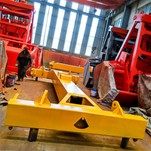
The port bagging machine is a specialized piece of automated or semi-automated equipment designed for ports, terminals, and logistics operations. Its primary function is to efficiently load bulk materials into standard packaging bags, streamlining the packaging process and enhancing operational efficiency. Here's a detailed breakdown of its capabilities:
Core Functions of the port bagging machine
Automated Packaging:The port bagging machine automates the entire packaging workflow, including:
Bag Clamping: Securing empty bags in place for filling.
Filling: Dispensing bulk materials (e.g., grain, fertilizer, minerals) into bags with precision.
Weighing: Using dynamic weighing technology (error rate as low as ±0.2%) to ensure consistent bag weights.
Bag Loosening: Releasing filled bags for conveying.
Conveying: Transporting packed bags to storage or shipping areas via integrated belt conveyors or other systems.
Material Compatibility:
Handles a wide range of materials, including granular substances (grain, fertilizer), powders, and even irregular particles (sand, gravel).
Adapts to different flow characteristics and weights, making it versatile for industries like agriculture, mining, and construction.
Process Integration:
Combines material receiving, weighing, filling, and sealing into a single automated system, reducing manual intervention and human error.
Applications of the port bagging machine
Port Terminals: Efficiently bags bulk cargo (e.g., grain, minerals) for export or domestic distribution.
Agriculture: Packages seeds, feed, or fertilizer for sale or storage.
Mining Operations: Handles ores or industrial materials with precision.
Construction Sites: Packages cement, sand, or gravel for transportation.
Benefits of the port bagging machine
Increased Productivity: Automates labor-intensive tasks, enabling faster throughput and higher daily output.
Cost Reduction: Lowers labor costs and minimizes material loss due to accurate weighing.
Quality Control: Ensures consistent bag weights, reducing customer complaints and compliance risks.
Scalability: Adapts to varying production volumes by adjusting filling speeds and bag sizes.